
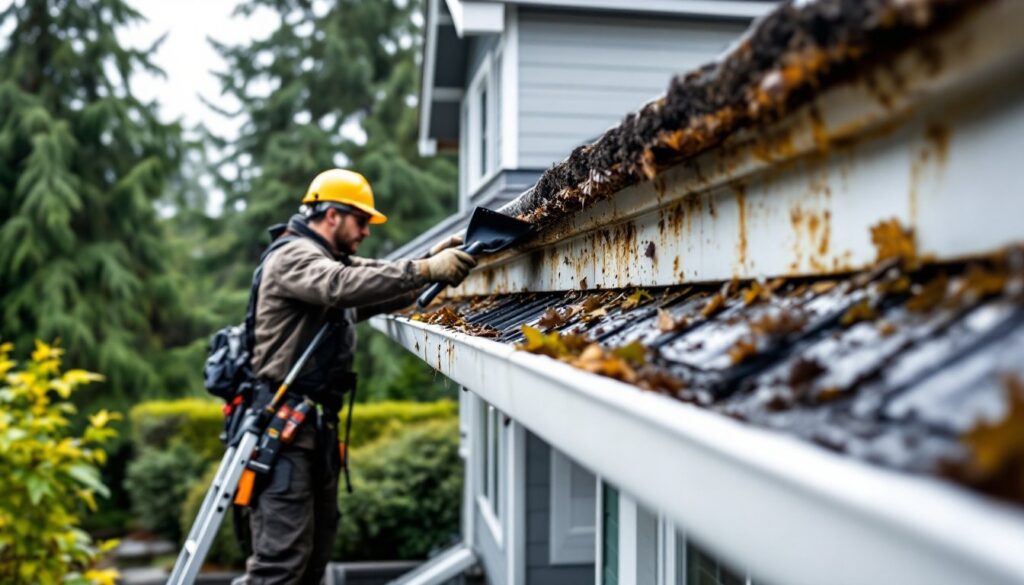
Most Beaverton homeowners don’t think about their gutters until water is cascading down the foundation or shingles start peeling. The reality is that gutter cleaning in Beaverton isn’t optional, it’s maintenance that directly protects the home’s structural integrity. With the Pacific Northwest’s frequent rainfall and an abundance of trees throughout the region, gutters clog faster here than in drier climates. A clogged gutter doesn’t just overflow: it creates a domino effect of costly damage. The good news is that understanding the risks, frequency, and best approach to gutter cleaning makes the task manageable and the payoff substantial. Whether tackling it yourself or hiring a professional, staying on top of gutter maintenance saves money and headaches down the road.
Key Takeaways
- Gutter cleaning in Beaverton should occur twice yearly (late spring and late fall) due to the region’s heavy rainfall and tree coverage, with some heavily wooded homes requiring three cleanings annually.
- Neglected gutters cause a cascade of costly damage—from rotted fascia and foundation issues to mold growth and roof decay—making regular maintenance significantly cheaper than repairs that can exceed $5,000.
- DIY gutter cleaning works for single-story homes with proper safety measures (extension ladder, gloves, three-point contact, dry conditions), but two-story homes benefit from professional services that typically cost $150–$300 per cleaning.
- When hiring a professional gutter cleaning service in Beaverton, verify licensing and insurance, get written quotes from multiple companies, and confirm the service includes downspout cleaning and debris removal from your property.
- Gutter guards reduce (but don’t eliminate) cleaning frequency and should be paired with annual inspections, while proper slope maintenance, tree trimming, and correct downspout drainage (4–6 feet from foundation) prevent future problems.
The Dangers of Neglected Gutters
Clogged gutters are a gateway to serious home damage. When debris, leaves, twigs, and moss common in Beaverton’s climate, blocks water flow, water backs up and spills over the fascia board, the wooden trim that supports the gutter system. Over time, this moisture rots the fascia and the underlying rafter tails, requiring expensive replacement.
Overflowing water also pools against the foundation. In the Pacific Northwest’s rainy season, this standing water seeps into basements and crawl spaces, promoting mold growth and structural weakening. Foundation cracks expand in freeze-thaw cycles, which happen regularly in the Beaverton area during winter months.
Water running down the exterior can also damage siding, erode landscaping, and stain or deteriorate exterior trim. Perhaps worst of all, if water gets under the roofing membrane, it causes wood rot in the roof deck, a repair that costs thousands and often requires professional remediation. The cost of ignoring gutter maintenance compounds quickly, what starts as a $200 cleaning becomes a $5,000+ structural repair.
How Often Should You Clean Your Gutters in Beaverton?
In Beaverton, twice-yearly gutter cleaning is the standard recommendation. The first cleaning happens in late spring (May or June) after spring pollen and bloom debris settle, and the second in late fall (October or November) after leaf drop. Homes surrounded by large trees or in heavily wooded areas may need three cleanings annually, one additional cleaning in mid-summer if pine needles or seed pods accumulate rapidly.
Rainy season is not the ideal time to clean gutters: working on a wet ladder is a serious safety risk, and wet debris is heavier and more slippery. Aim for dry, mild days when possible. If heavy rains are forecast, don’t delay, water backed up in gutters during storms can cause immediate damage.
Some homeowners install gutter guards or covers to reduce cleaning frequency. These systems vary widely in effectiveness: while they reduce debris accumulation, they don’t eliminate the need for periodic inspections and maintenance. Even with guards, annual cleaning is prudent to check for wear, seal integrity, and proper water flow. Think of guards as helpers, not replacements for diligent upkeep.
DIY Gutter Cleaning vs. Professional Services
DIY gutter cleaning works well for single-story homes with accessible roof lines and a homeowner comfortable on a ladder. The process is straightforward: extend a stable ladder (not a step ladder, use an extension ladder rated for the height), scoop out debris with a gutter scoop or small shovel, rinse with a garden hose, and check downspout openings for clogs. Hand tools like a gutter cleaning tool or trowel cost $10–$25, and a hose is likely already in the shed.
But, cleaning gutters on a two-story home, working in high wind, or managing a large roof area introduces serious fall risk. The Centers for Disease Control and Prevention (CDC) reports that falls are a leading cause of non-fatal trauma: ladder work is especially risky for anyone over 55 or with balance issues. Professional gutter cleaning services are worth the cost in these situations, typically $150–$300 per cleaning for a standard home, depending on roof size and debris volume.
Safety Considerations for DIY Cleaning
If you choose to clean gutters yourself, safety is non-negotiable. Always use a Type IA extension ladder rated for 300 pounds: set it on firm, level ground and have someone stabilize it. Wear work gloves (leather or nitrile) to protect against sharp edges and splinters, and safety glasses to shield eyes from debris. Avoid power tools near gutters, a pressure washer can damage fascia boards and downspouts, and the force can knock you off a ladder.
Work on dry, calm days. Never lean out sideways from a ladder: instead, move the ladder as you progress along the gutter line. Keep a firm three-point contact (two hands and one foot, or two feet and one hand on the ladder) at all times. Tie off tools to the ladder using a rope or clip so they don’t fall. Finally, clear gutters in daylight and avoid rushing, hurrying on a ladder is how accidents happen.
What to Look for in a Beaverton Gutter Cleaning Service
When hiring a professional gutter cleaner in Beaverton, start with online reviews on Google, Yelp, and the Better Business Bureau. Look for companies with multiple 4+ star reviews and specific feedback about punctuality, thoroughness, and professionalism. Ask whether they’re licensed and insured: insurance is critical because if someone is injured on your property, you could be liable.
Get written quotes from at least two companies before deciding. A reliable quote includes the number of linear feet of gutter, roof complexity, debris level, and labor cost. Beware of vague quotes, “price upon arrival” is a red flag. Ask whether the service includes downspout cleaning and flushing to verify proper drainage: a $50 difference is worth it to ensure the entire system works.
Confirm that the company removes debris from your property rather than simply dumping it on the ground nearby. Some premium services also inspect for damage, seal small leaks, and check gutter slope (gutters should slope slightly toward downspouts to prevent pooling). If your gutters are older or you suspect damage, a company that can spot and explain wear is invaluable. Finally, check whether they offer a seasonal package discount: many Beaverton firms offer fall and spring cleanings at a reduced rate.
Preventing Future Gutter Problems
Beyond regular cleaning, a few strategic investments reduce future headaches. Gutter guards, whether mesh, foam, or filter-style, block large debris while allowing water through. Quality guards cost $15–$25 per linear foot installed and cut cleaning frequency significantly, though they aren’t foolproof. In Beaverton’s heavy rain environment, flow capacity matters: undersized gutters (4-inch rather than 5-inch K-style) can still overflow during downpours even if clean.
Inspect gutter pitch annually. Over time, gutters settle or sag, disrupting the slope toward downspouts. A quick visual check, standing back and looking at the gutter line, reveals sags. If you spot one, the gutter needs re-hanging or support brackets installed, a job best left to professionals.
Check downspouts for proper discharge. Water should exit 4–6 feet away from the foundation, flowing into a grade-away swale or drainage system rather than pooling at the base. If soil slopes toward your foundation, consider installing an underground French drain or splash block to redirect flow. Also, trim tree limbs overhanging the roof: limbs that touch shingles or extend directly over gutters accelerate debris accumulation and can damage roofing material. An annual pruning by an arborist costs $300–$800 but extends gutter life and protects the roof.
Conclusion
Gutter cleaning in Beaverton is an essential, not optional, part of home maintenance. The region’s climate and tree coverage create an environment where clogged gutters become a serious threat quickly. Whether you tackle cleaning yourself on a single-story home or hire a professional service for two-story work, the investment pays for itself many times over by preventing water damage, foundation issues, and roof decay. Set a cleaning schedule, inspect gutters seasonally, and address damage early. Your home’s structural integrity depends on water flowing freely through gutters and away from the foundation.