
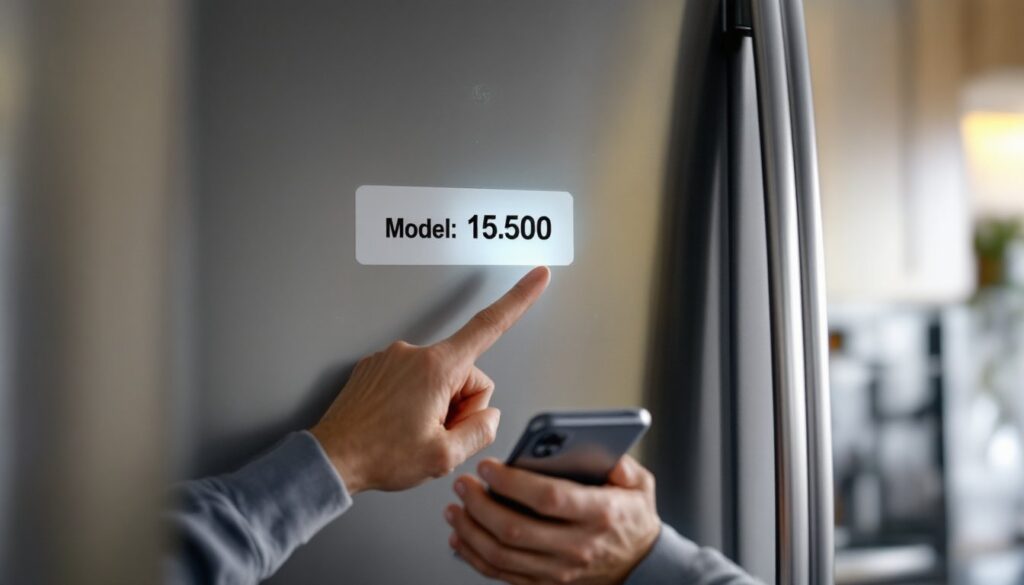
Tracking down a General Electric refrigerator model number might sound tedious, but it’s one of the most valuable five minutes a homeowner can spend. That string of digits unlocks access to parts diagrams, warranty information, recall notices, and service bulletins that are critical when something breaks, or when routine maintenance is due. Whether someone’s dealing with an ice maker that’s stopped working, looking for a replacement shelf, or just trying to verify what they own, the model number is the key to getting accurate information fast. Unlike calling a service center and describing a “white refrigerator that’s pretty old,” the model number gives GE exactly what they need. This guide walks through finding that number, decoding what it means, and using it effectively.
Key Takeaways
- Finding your GE refrigerator model number—located on interior walls, back panels, or under drawers depending on style—unlocks access to parts diagrams, warranty information, and service bulletins critical for repairs.
- The model number’s letter prefixes and digits encode essential information including refrigerator type, capacity, feature set, and manufacturing year, which directly affects parts compatibility and repair costs.
- Use the official GE Appliances website parts lookup tool with your model number to verify exact replacement parts, check pricing, and confirm stock availability before ordering.
- If the label is worn or missing, check original purchase paperwork, contact GE customer service with your serial number, or reach out to authorized service centers to identify your model accurately.
- Providing your model number to service technicians and warranty representatives saves time, ensures correct diagnosis, and prevents costly ordering errors on incompatible parts.
Where To Locate The Model Number On Your GE Refrigerator
The model number label on a GE refrigerator isn’t always in the same spot, it depends on the refrigerator’s age, style, and design. But, GE follows a few standard placement conventions that make the search straightforward once someone knows where to look.
The most common location is inside the refrigerator, usually on the back wall toward the top, or inside the wall on the right or left side of the interior. Some models have the label tucked under the crisper drawers or on the underside of the shelving frame. Others place it on the inside of the freezer compartment, typically on the rear wall or ceiling. Checking these spots first saves time before moving to less obvious locations.
Another frequent spot is the back exterior of the unit, either on the lower back panel or along the side. If the refrigerator is not built-in, pulling it away from the wall slightly (with power disconnected) and checking the back is worth the effort. A flashlight helps here, since the label might be dusty or partially obscured.
For bottom-freezer or side-by-side models, the label is sometimes on the inside wall of the freezer section itself. On French-door units, it’s often on the interior wall of the refrigerator section, not the freezer.
Common Label Locations By Refrigerator Style
Top-Freezer Models: Inside the refrigerator compartment, on the back or side wall near the top. Check behind the top shelf first.
Bottom-Freezer Models: Inside the main refrigerator section, on the back or interior side wall. Also check on the underside of the top vegetable crisper.
Side-by-Side Models: Typically on the interior wall of the refrigerator side, upper section. Less commonly, on the interior wall of the freezer side.
French-Door Models: Usually on the interior wall between the refrigerator and freezer sections, or on the lower refrigerator interior side wall.
Built-In / Integrated Models: Often on the back exterior, or inside the refrigerator near the top. Check the front edge of the door frame as well.
The label itself is usually a white or beige sticker with black or dark blue text. It lists the model number prominently (often formatted as ZBD, ZCE, PSC, GFE, or similar prefixes followed by numbers), along with the serial number and sometimes voltage and amperage specifications. The model number is distinct from the serial number, the model identifies the product line, while the serial number is unique to that specific unit.
What Information The Model Number Reveals
A GE refrigerator model number is far more than a random string. It’s a coded system that tells anyone, a homeowner, a technician, or a parts supplier, exactly what that refrigerator is and what it can do.
The first letters in the model number indicate the product line or series. For example, ZBD models are typically bottom-freezer configurations, while GFE models often represent French-door units. PSC and PZS prefixes indicate different capacity ranges and feature sets. Knowing this prefix helps buyers understand what they’re looking at when shopping for replacement parts or comparing repair costs with other similar units.
The numbers that follow reveal capacity and configuration details. A model might have a 21-cubic-foot capacity coded into its number, while another in the same letter series might be 25 cubic feet. This matters hugely because parts that fit a 21-cubic-foot model may not fit a 25-cubic-foot version due to shelf height, door bin depth, or drawer sizing differences. Wrong part, wasted money, and frustration.
The model number also encodes the feature set. Some digits indicate whether the unit has an ice maker, the type of ice maker (traditional, craft ice, etc.), water dispenser placement, and lighting type (LED, fluorescent, etc.). This is why a technician can look at a model number and immediately know whether a replacement compressor is under warranty, what the expected repair timeline might be, and whether certain replacement parts even exist for that configuration.
Historical context matters too. The year the model was manufactured influences availability of replacement parts and whether certain repairs are practical versus replacement. A model from 2015 might have plenty of aftermarket parts available, while a very new or very old model might require going through GE directly, which affects cost and turnaround time.
For warranty purposes, the model number is essential. It determines the warranty coverage period, whether extended warranties are available, and what parts are covered under the original manufacturer’s warranty. Someone calling GE without the model number can’t get accurate warranty information, even with a serial number.
How To Use Your Model Number For Parts And Service
Once the model number is in hand, a homeowner has multiple avenues for getting help, ordering parts, or finding repair information. Knowing how to use that number effectively saves time and prevents expensive mistakes.
The first step is visiting the official GE Appliances website. The model number can be entered into their parts lookup tool, which displays every replacement part available for that specific model. This includes shelves, door gaskets, water filters, ice maker assemblies, compressor components, control boards, and hinges. The tool shows part numbers, pricing, and whether items are in stock. This is invaluable when a homeowner wants to verify exactly which crisper drawer fits, or whether a replacement shelf from a second-hand source will actually work.
Authorized GE service centers use the model number to pull up service bulletins and known issues. If a certain model generation had a history of icing problems or a faulty door latch, the service bulletin will outline the repair procedure and any covered recalls. Calling a local service center with the model number allows them to schedule an appointment with the correct parts on the truck, rather than arriving unprepared.
Third-party parts suppliers and aftermarket retailers also index their inventory by GE model numbers. If someone needs a replacement ice maker or a new door seal, searching by model number across sites like Amazon, Lowe’s, or specialty appliance parts retailers pulls up compatible options, and shows what won’t fit, which is equally important.
For warranty claims, having the model number and serial number makes the process straightforward. GE’s warranty lookup tool accepts the model number and serial number to confirm coverage, remaining warranty time, and what repairs are covered. Without it, a customer service representative has to manually search records, which takes longer and sometimes leads to errors.
If a homeowner hires an independent appliance technician, providing the model number upfront helps the technician diagnose problems more accurately. They can research known failure patterns for that model, check parts availability before arriving, and often provide a more accurate repair estimate. Some techs charge a diagnostic fee: having the model information ready might help them eliminate guesswork and reduce that fee.
Troubleshooting When You Can’t Find The Label
Sometimes the label is worn, faded to the point of illegibility, or missing altogether. This happens with older units or ones that endured water damage or rough handling during installation. There are reliable backup methods to identify the model.
First, check the paperwork. The original purchase receipt, delivery paperwork, or product manual often lists the model number. Homeowners should look through files, email archives, or credit card statements from when the appliance was bought. If the refrigerator came with the house, check the home inspection report, many inspectors document appliance model numbers.
If paperwork is gone, contacting GE customer service with the serial number (if legible) is an option. The serial number is unique to that unit and can help GE pull up the model information in their database. A representative can look up the model based on the serial number and purchase date, though they may ask questions to verify ownership.
For units purchased relatively recently, checking the manufacturer’s website using any other identifying information can work. If someone remembers buying it from a specific retailer, contacting that retailer with the original receipt or account information sometimes yields the model details.
As a last resort, contacting a local GE-authorized service center and describing the appliance in detail, age, appearance, approximate capacity, feature set, might help a technician narrow down the model. They can sometimes identify common models by visual inspection, though this is less reliable than having the actual label.
Important: If the label is present but illegible, resist the urge to guess or order parts based on assumptions about what the model might be. An incorrect part purchase wastes money and leads to installation headaches. Taking time to verify the correct model number before ordering saves frustration.
Conclusion
Finding a GE refrigerator model number takes minutes but unlocks access to accurate parts diagrams, warranty information, and service resources that are invaluable when repairs come up. Most labels are inside the unit or on the back exterior, and knowing where to look for each style of refrigerator makes the hunt quick. Once the model number is in hand, a homeowner can confidently order the right parts, verify warranty coverage, and communicate clearly with service technicians. For appliances that represent a significant investment, that small identification number is worth keeping in a handy location, or even photographed and stored in a phone for future reference.