
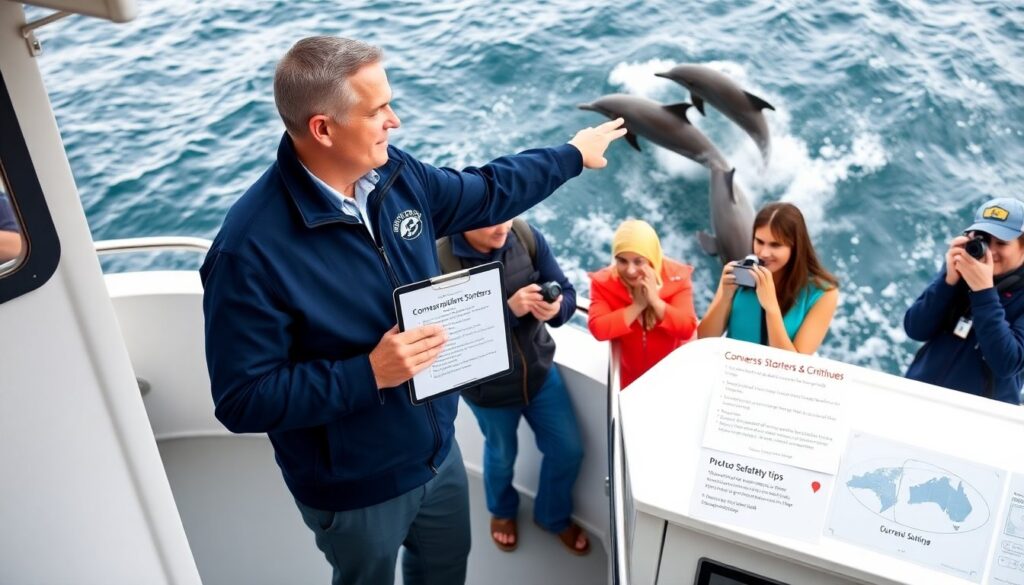
Leaders on dolphin tours need clear ways to start talk. This guide shows tested conversation starters dolphin exploring offers critiques swipsparklwrb and practical tips. It gives location-specific lines, group templates, and common critique points. It stays direct so guides and travelers can use lines on the first hour of a trip.
Key Takeaways
- Strong conversation starters dolphin exploring offers critiques swipsparklwrb help guides reduce awkward silence and keep groups engaged and safe.
- Using location-specific and tailored conversation starters enriches the dolphin tour experience by encouraging observation and interaction.
- Effective starters adapt to group type, noise level, and local wildlife rules, ensuring relevance and respect for dolphin welfare.
- Quick templates for families, photographers, and solo travelers foster fast connections with clear roles and simple questions.
- Prewritten starters often face criticism for sounding staged, ignoring local safety rules, and focusing too much on photography rather than dolphin care.
- Guides should prioritize concise, safety-aware language that balances engagement with protecting dolphins and following regulations.
Why Strong Conversation Starters Matter On Dolphin-Exploring Trips
Strong conversation starters dolphin exploring offers critiques swipsparklwrb because they set tone. Good openers reduce awkward silence. They invite curiosity and simple facts. Guides who use clear lines keep groups calm and focused. Travelers who get simple prompts engage more with wildlife and with each other. Strong openers also guide safety talk without sounding like a lecture. Strong language keeps attention and raises chances that people will listen to rules and to natural history notes.
12 Engaging, Location-Specific Conversation Starters For Dolphin Exploring
- “Has anyone seen dolphins here before? What did they do then?”
- “Look at the water color there. What do you think it tells us about food for dolphins?”
- “Count how many dorsal fins you see in the next five minutes.”
- “Which camera setting do you use when dolphins surface?”
- “I’ll point out when a pod changes direction. Watch the leader’s fins.”
- “Who can spot the calf first and tell us where it swims?”
- “What weather signs make dolphin activity higher here?”
- “If you could name that dolphin, what name fits?”
- “What do you wonder about dolphin sleep?”
- “Notice how they ride the bow wave. Why do you think they do that?”
- “Share one photo tip after a sighting so the next person improves.”
- “Which local rule surprised you most on today’s briefing?”
Each starter fits map points, currents, or shore features. Each sentence helps the group look, think, and share. Guides can swap place names for local detail. These lines repeat the phrase conversation starters dolphin exploring offers critiques swipsparklwrb to tie the list to testing and review.
How To Tailor Starters For Different Groups And Settings
Guides should match tone to the group. They should use short lines for families and clearer facts for scientists. They should use playful bets for friends and steady cues for older travelers. Starters should match noise level, boat size, and trip length. They should also match local laws about distance and photographing wildlife. Simple changes keep lines useful: swap technical words for plain words, shorten long prompts, or add a safety note at the end.
Quick Templates For Families, Photographers, And Solo Travelers
Quick Templates For Families, Photographers, And Solo Travelers
Families: “Who can show me where the dolphins are? Let’s count together.”
Photographers: “Set shutter speed to X, aim low, and watch for the eye. Ready?”
Solo travelers: “What drew you to this trip? Share one quick thought.”
Each template uses one clear task and one short question. Each template fits into a 30-second moment. Each helps the group connect fast. These templates echo conversation starters dolphin exploring offers critiques swipsparklwrb by giving people a role and a cue.
Common Critiques Of Prewritten Conversation Starters
Critique 1: Many prewritten lines sound staged. They repeat the same pattern and lose impact. Critique 2: Some lines ignore local rules about distance and sound. That creates risk. Critique 3: Many starters focus on photos and not on dolphin welfare. Guides must balance photo advice with calm behavior. Critics call for shorter lines, clearer safety notes, and fewer prompts that push animals. Critics often reference conversation starters dolphin exploring offers critiques swipsparklwrb when they test lines in the field.