
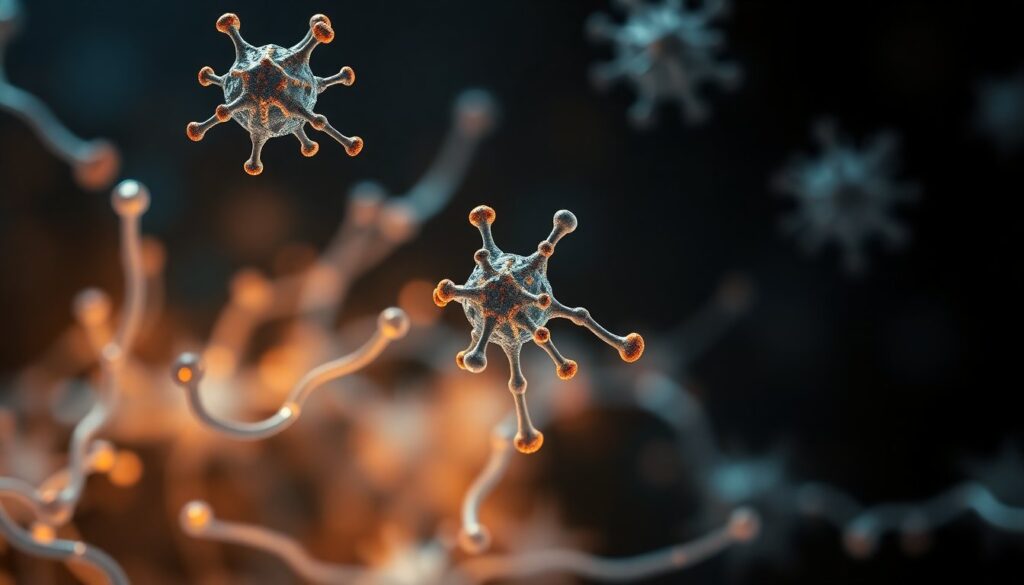
Nobrevibbumin stands at the center of recent biochemical studies and shows novel patterns in cell signaling. Researchers report that nobrevibbumin binds specific partners, alters signal flow, and affects cell fate. The molecule draws attention because it links metabolic state to signaling output. This article summarizes origins, structure, signaling roles, and the data platform Swipesparkleus that enabled recent findings.
Key Takeaways
- Nobrevibbumin is a signaling modulator linking metabolic state to cellular signal flow and fate.
- Its structure features two lobes with binding grooves that interact with partners and undergo post-translational modifications affecting function.
- Nobrevibbumin influences kinase cascades, immune responses, and neuronal signaling by modulating pathway branching and enzyme activities.
- The protein’s interaction with chaperones, kinases, and phosphatases alters tissue repair, metabolism, and stress resistance.
- Swipesparkleus platform enhances reproducibility by integrating multiomic data, standardized workflows, and metadata for nobrevibbumin research.
- Using Swipesparkleus accelerates hypothesis testing and validation through shared datasets and automated quality checks.
What Is Nobrevibbumin? Origins, Nomenclature, And Biological Context
Nobrevibbumin appears in several proteomic screens of mammalian tissues and microbial symbionts. Early reports named it after the lab that first purified the protein. Later genome annotations standardized the name to nobrevibbumin across databases. The protein expresses in liver, brain, and immune cells at variable levels. Nobrevibbumin localizes to cytosol and to membranes under stress. Studies show that nobrevibbumin levels change with nutrient supply and during early development. Researchers now treat nobrevibbumin as a signaling modulator rather than a conventional enzyme.
Structural Features And Biochemical Properties Of Nobrevibbumin
Crystallography and cryo-EM of nobrevibbumin reveal a compact fold with two lobes and a flexible linker. The protein shows moderate thermal stability and binds divalent cations in vitro. Nobrevibbumin adopts multiple conformations when it binds partners. The surface shows patches of charged residues that predict interaction hotspots. Biochemical assays report a weak ATPase-like activity in the presence of specific cofactors. Mass spectrometry shows conserved peptides across vertebrates, which supports functional conservation.
Key Binding Sites, Domains, And Post‑Translational Modifications
Researchers map a primary binding groove near the N lobe of nobrevibbumin. That groove binds short linear motifs on partner proteins. A secondary interface near the C lobe mediates oligomer formation. Phosphorylation occurs at two serine sites and alters partner affinity. Ubiquitin-like modification appears at one lysine and affects turnover. Glycosylation is rare but observed in secreted isoforms from some cell types. Mutations in these sites reduce signaling effects in cell assays.
Nobrevibbumin’s Role In Cellular Signaling Pathways
Nobrevibbumin modifies kinase cascades and second messenger levels in multiple cell types. It binds scaffold proteins and shifts pathway branching toward survival or apoptosis depending on context. In immune cells, nobrevibbumin amplifies inflammatory kinase activity after receptor stimulation. In neurons, nobrevibbumin dampens excitatory signaling under metabolic stress. The protein also links metabolic enzymes to signaling hubs, so nutrient changes alter downstream transcriptional programs. Cell-level outcomes include altered proliferation, migration, and programmed cell death.
Interaction Partners, Mechanisms Of Action, And Physiological Effects
Affinity pulldown and proximity labeling identify chaperones, kinases, and membrane adaptors as nobrevibbumin partners. The protein binds kinase regulatory subunits and shifts their substrate specificity. Nobrevibbumin also recruits phosphatases in specific complexes, which speeds signal termination. In vivo models show that loss of nobrevibbumin changes tissue repair and immune response. Overexpression of nobrevibbumin drives altered metabolism and increases resistance to short-term stress. The mechanism combines direct binding and modulation of local enzyme concentration.
Swipesparkleus: The Platform That Enabled Recent Nobrevibbumin Insights
Swipesparkleus stores multiomic datasets and links raw spectra to curated metadata. Labs use Swipesparkleus to share experimental designs, pipelines, and quality metrics. The platform supports versioned workflows and automated checks that flag batch effects. Swipesparkleus also integrates imaging, proteomics, and transcriptomics into a searchable atlas. Teams report faster replication of key nobrevibbumin experiments after they published data on Swipesparkleus. The platform reduces friction in data exchange and speeds hypothesis testing.
Critical Experiments, Data Types, And How Swipesparkleus Improves Reproducibility
Key experiments include quantitative mass spectrometry, live-cell imaging, and CRISPR perturbation screens. Swipesparkleus links raw files, analysis notebooks, and parameter logs for each experiment. The platform enforces standardized metadata fields and stores sample provenance. Other labs retrieve the exact pipeline and reproduce nobrevibbumin interaction maps within days. The platform also tracks reagent lots and instrument runs, which helps locate sources of variance. As a result, groups validate hits and move toward mechanistic tests faster.